One Page, One Job: What a Chiang Mai Bar Sign Taught Me About SEO
Kaung Ye Marn
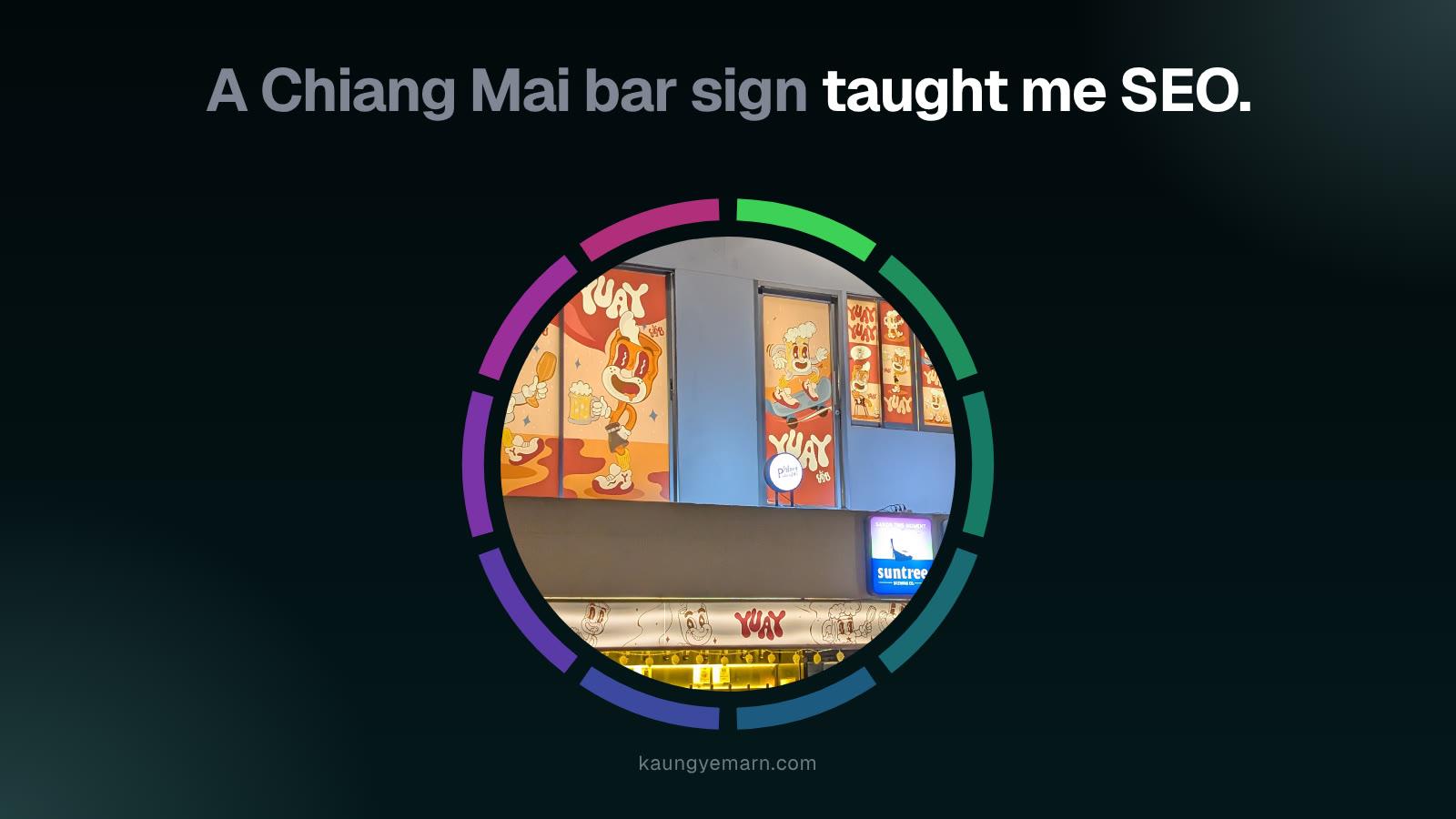
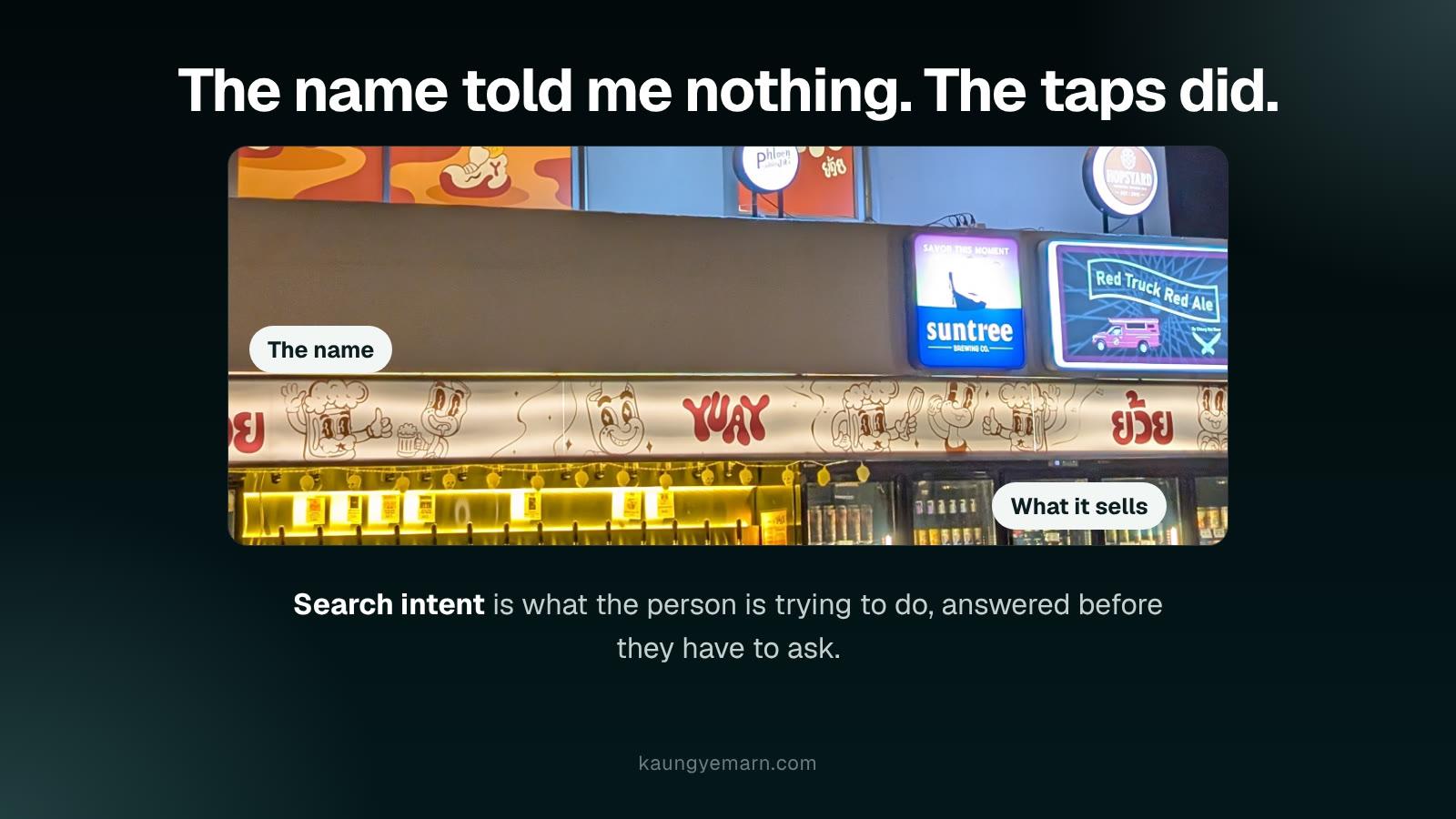
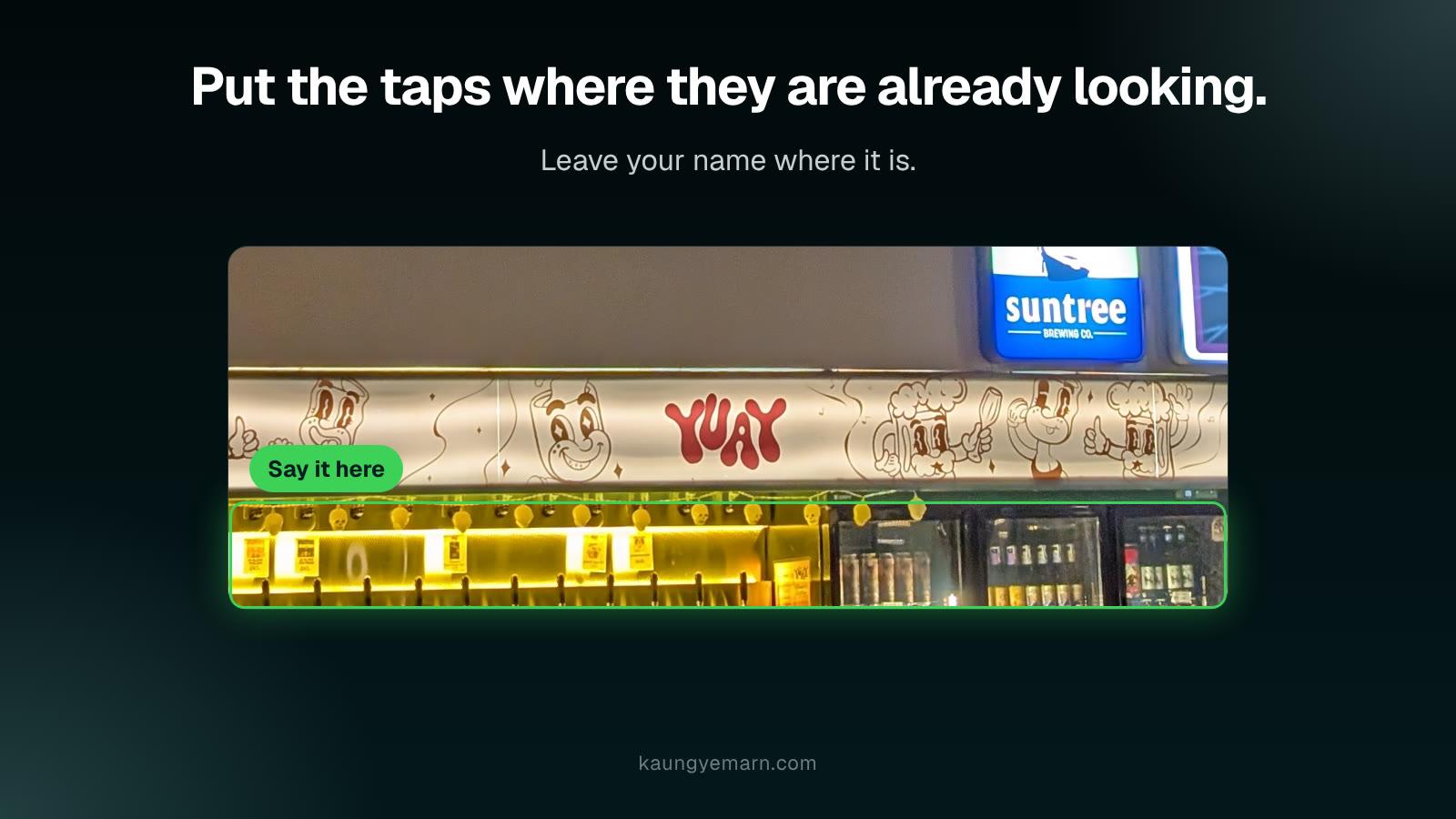
Walk down a Chiang Mai street after dark and you pass a hundred places asking for your attention. The bar I stopped at has a lit band across the front that spells its name twice, in Latin letters and in Thai, YUAY and ย้วย. A name like that tells a stranger nothing. What tells them is everything under it: a wall of beer taps glowing yellow, and fridges stacked with cans. I knew what the place sold before I read a word of the menu. Its own page uses the full name, Yuay ย้วย Local Craft Beer, which adds the three words the sign leaves out.Nobody there would call this a ranking problem, but it is one. When business owners ask me about SEO, the first question tends to be the same, how do I rank for my keyword? It sounds practical. It also produces the sign that has only a name on it, because a name feels like the job of branding, and a stranger walking past learns nothing.Google's helpful-content guidance puts the test to a whole website. One of its self-check questions reads, "Does your site have a primary purpose or focus?" The taps answer that from across the street. A home page that opens with "Welcome to our website" is still working on it.
One page, one job
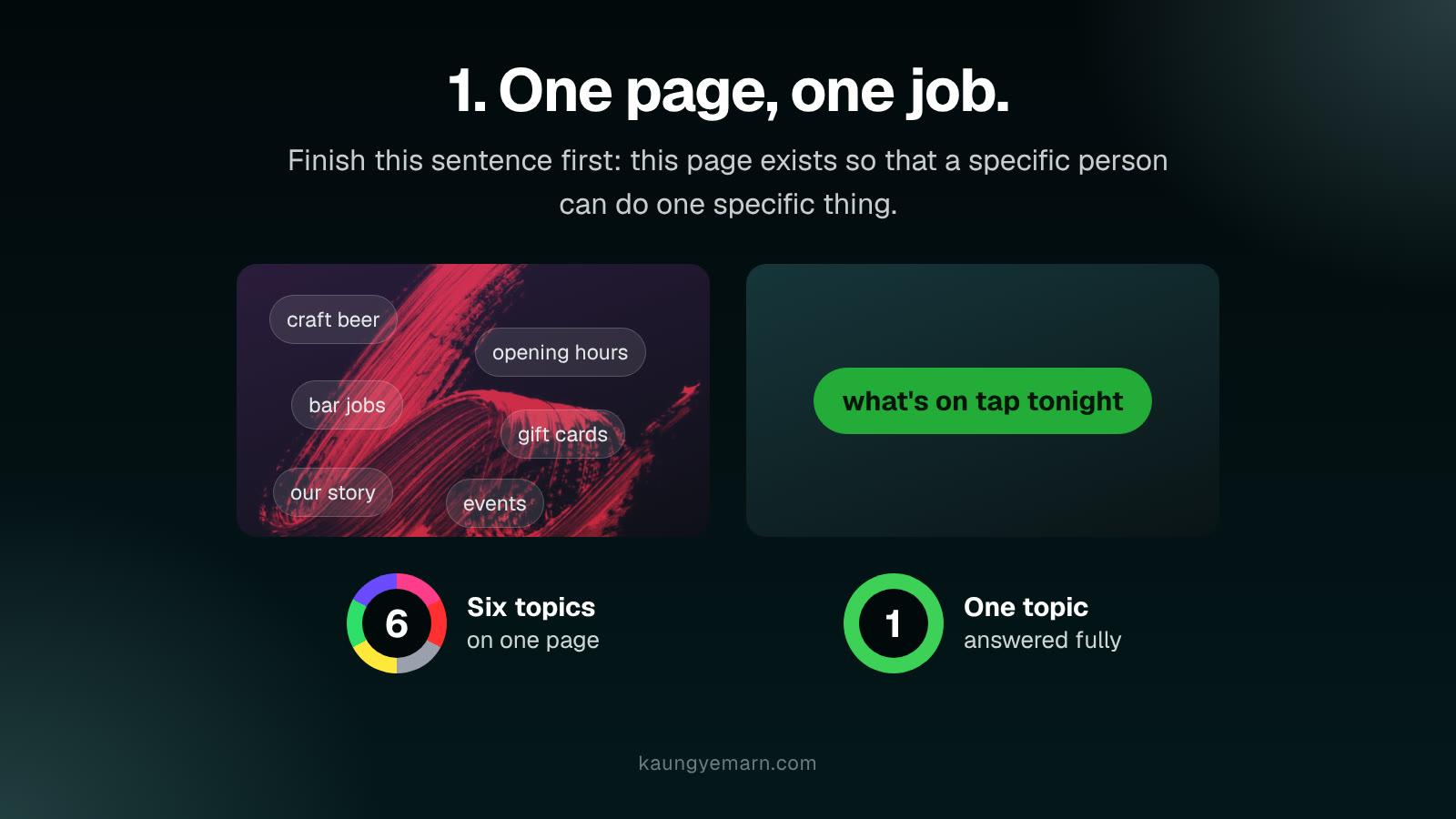
The fix is short enough to write on a napkin. Before you write or rewrite a page, finish this sentence: this page exists so that a specific person can do one specific thing. If the sentence needs an "and" to hold together, you are looking at two pages. Search intent is the name for what that sentence records: what the person typing is trying to do.That sentence is more than a writing trick, because Google measures a page against its purpose. Its guidance on helpful content defines "main content" as any part of a page that directly helps the page achieve its purpose, and adds that the Search Quality Evaluator Guidelines treat the quality of that content as one of the most critical factors for assessing a page, specifically "how effectively it allows the page to achieve its purpose." A page with no stated purpose has nothing to be effective at. A page with six has six chances to be mediocre.YUAY does this in hardware. From the street, the loudest thing on its front is the wall of taps and the fridges of cans, and the cartoon windows above sit politely behind them. A page can be built the same way, with one loud thing and a supporting cast that earns its place by pointing at it.
Try it on your own site this week, one page at a time, starting with whichever page you would struggle most to describe. The sentence takes thirty seconds to write. Deciding which of its jobs the page gets to keep takes the rest of the afternoon.
Two readers, two kinds of page
The cleanest case I have comes from my own client work. Lethwei World is a media brand covering a traditional Myanmar combat sport that most of the world has never heard of. When I started on its search in May 2026, the brief came down to two different people typing into Google: someone who already follows Lethwei and wants fighters, rules and fight cards, and someone who has just met the sport and wants to know what it is. Same site, two jobs, so two kinds of page.The newcomer got a beginner's guide written as direct answers to the questions a newcomer asks, marked up so a crawler does not have to infer anything from prose. Across the three months to 31 July, the Search Console data shows 73,100 impressions for the site and 516 clicks, and the project's generative AI report counted 6,170 impressions inside AI-generated search results. The beginner's guide alone took 1,758 of those 6,170, more than a quarter, and the top three pages together took 3,145, just over half.One limit applies to all of it, and the project's own write-up says so: there is no clean baseline before May, so I will not hand you a growth percentage, and these numbers do not prove that one job per page caused them. They show where the AI impressions landed. They concentrated on a short list of pages built to answer a question directly, and the page at the top of that list was written for exactly one kind of reader. One site over one quarter is a pattern, not a proof, and I would rather you read it that way.
Ten minutes on one page
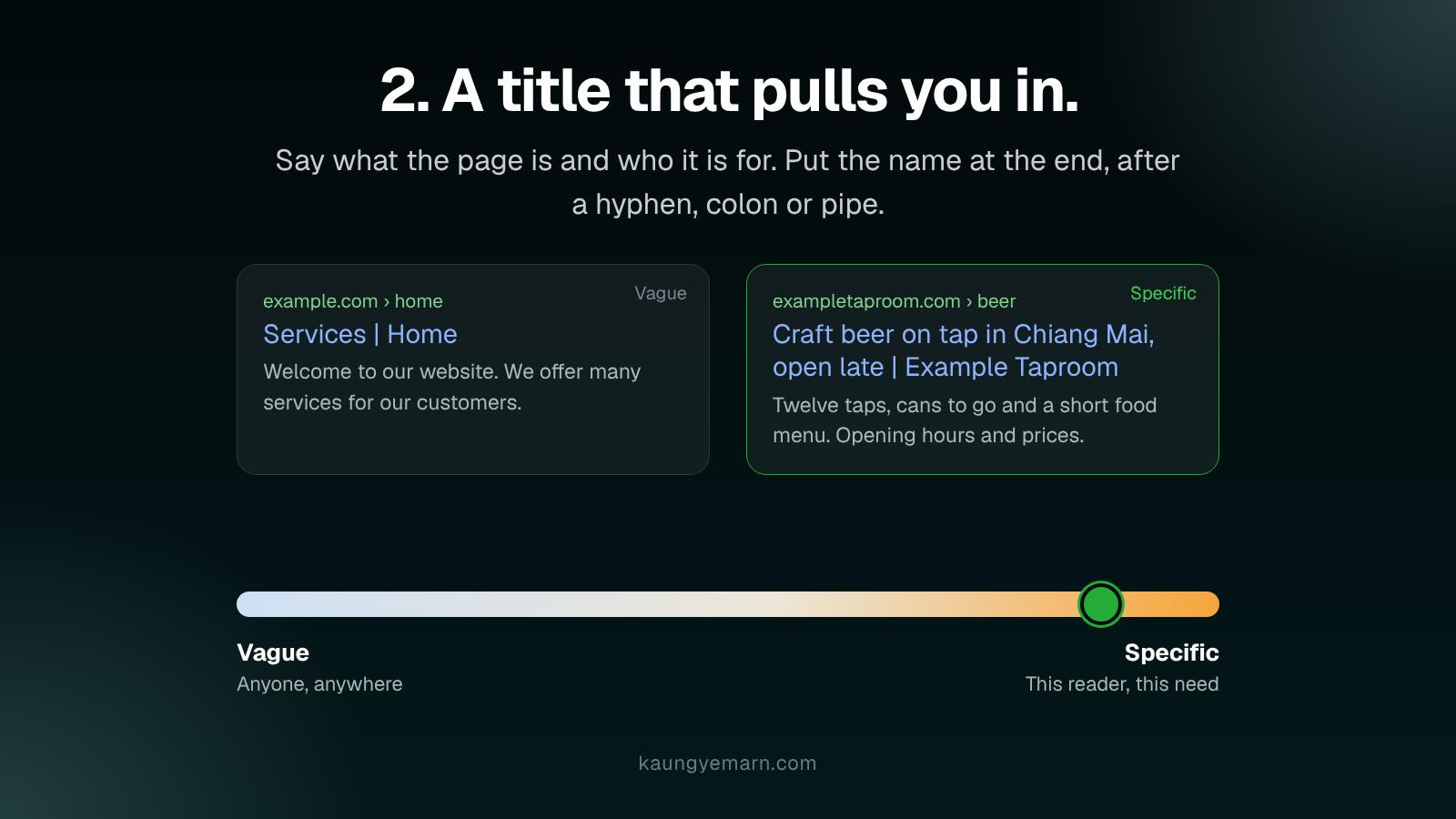
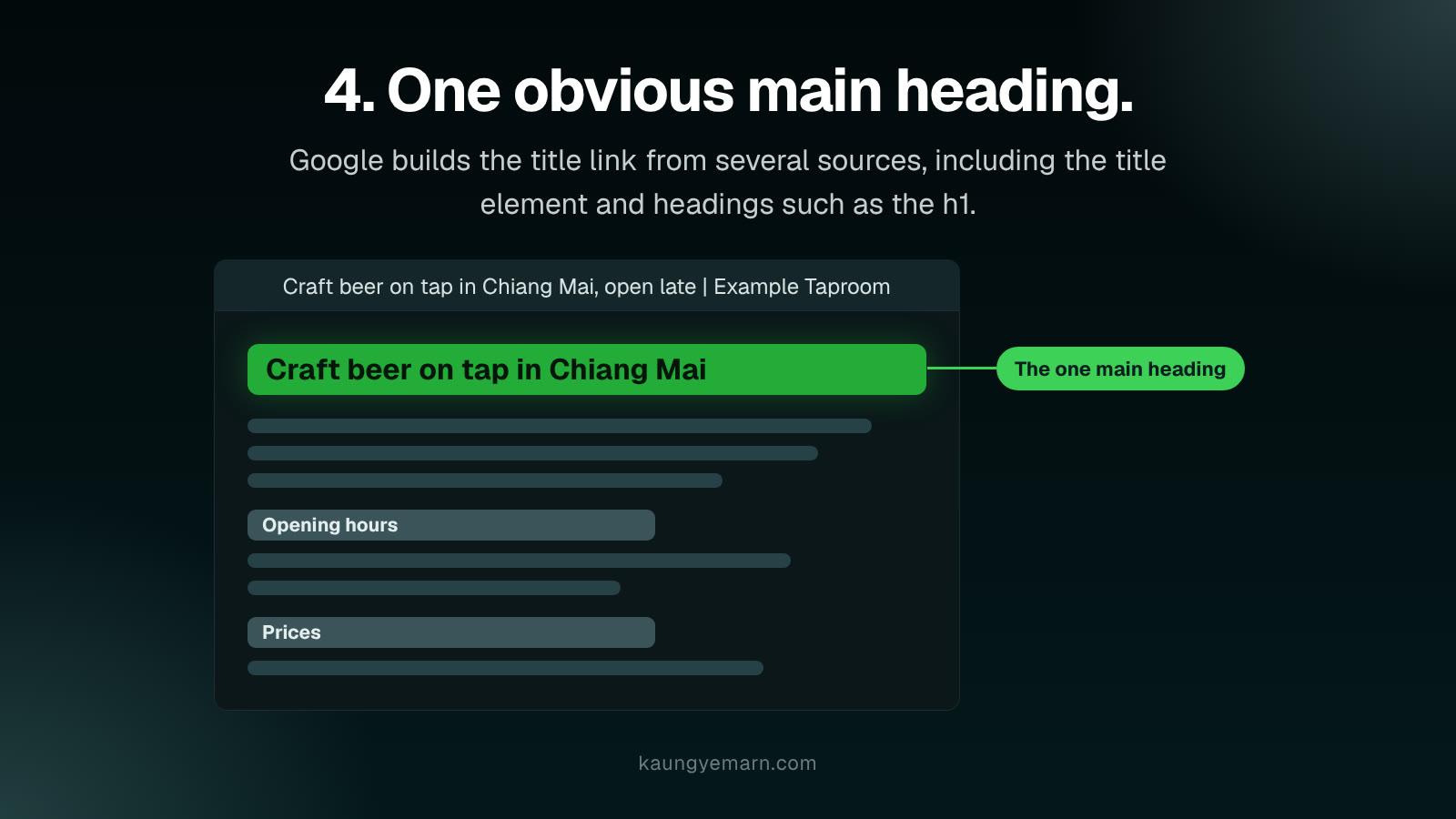
Keep the page you picked open and start a clock.First, copy its title, the text that shows in the browser tab, and read it alone, the way a stranger meets it in a list of ten results. Google's guidance asks for titles that are descriptive, concise and different on every page, and it uses "Home" as its example of a label too vague to help anyone. A made-up taproom shows the gap. "Services | Home" tells a stranger nothing, while "Craft beer on tap in Chiang Mai, open late | Example Taproom" says what and where before the name arrives. Google suggests putting the site name at the beginning or end, separated by a hyphen, colon or pipe, so the page gets the opening words.
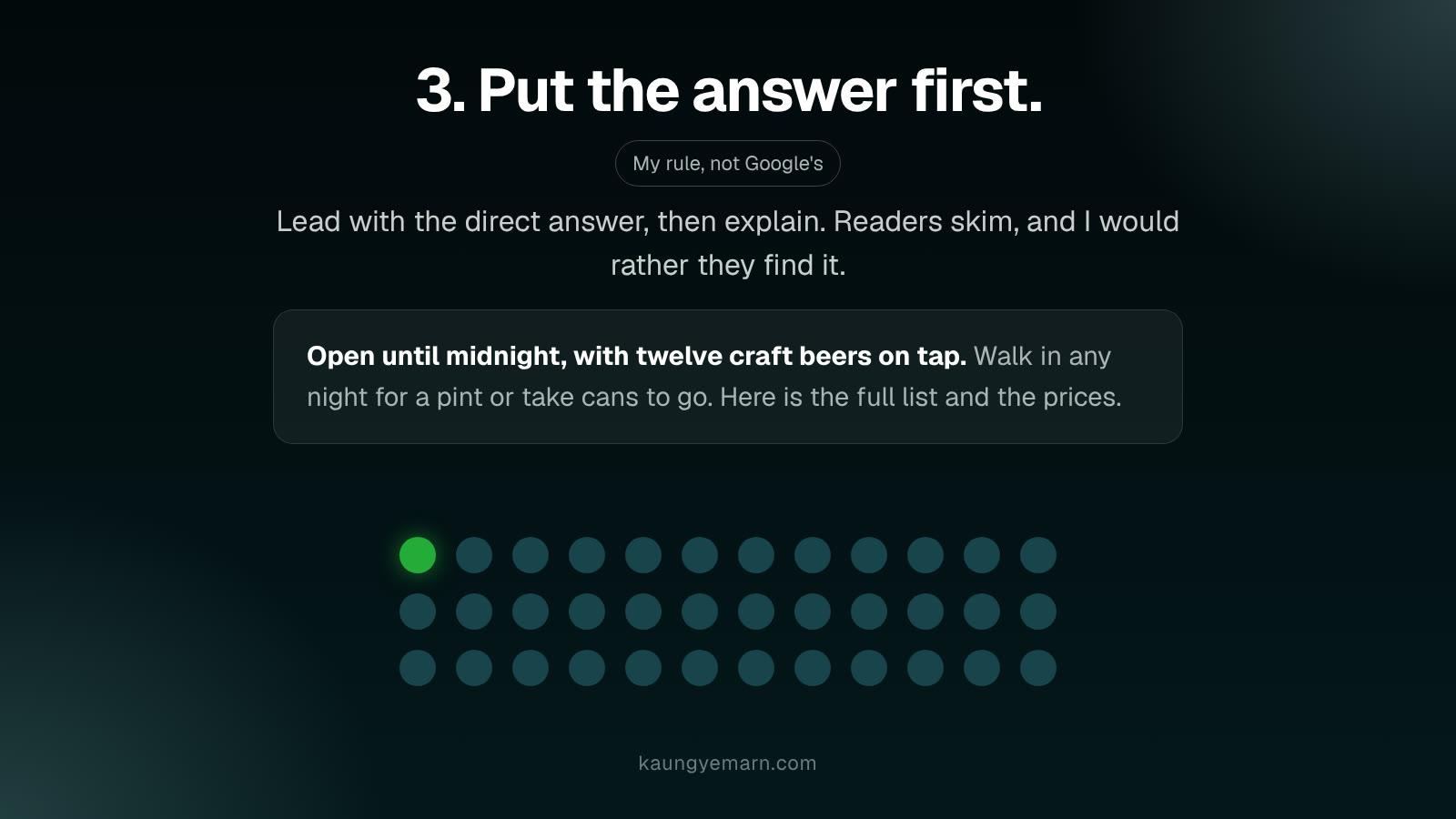
Second, look at the first screen of the page and ask whether the sentence you wrote earlier is answered there. If a welcome message or a rotating banner has the top spot, move the answer up and let the welcome go. That one is my rule and not Google's: lead with the direct answer, then explain, because readers skim and I would rather they find it.
Third, find the main heading. Google builds the title link on its own from several sources, including the title element and headings such as the h1, so the page needs one heading that is obviously the main one.
Then do the part that costs least. Google calls the title link "often the primary piece of information people use to decide which result to click," and yours is one line of text.I did not read the name on that bar until after I had decided to walk in, because the taps had settled the question first. A stranger arriving on your page decides in much the same order. Leave your name where it is, and put the taps where they are already looking.